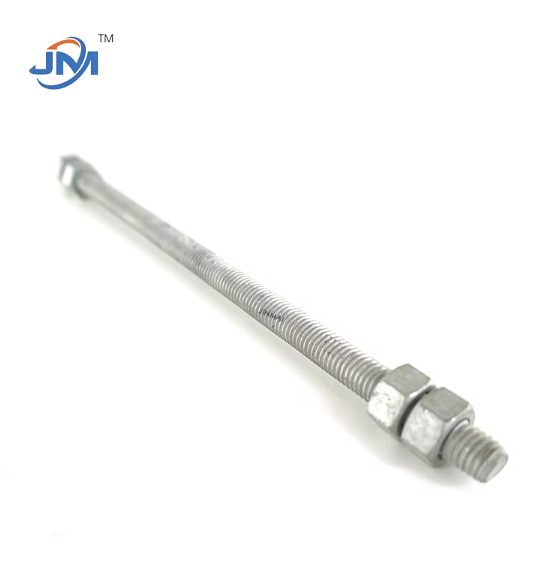
Stud Bolt
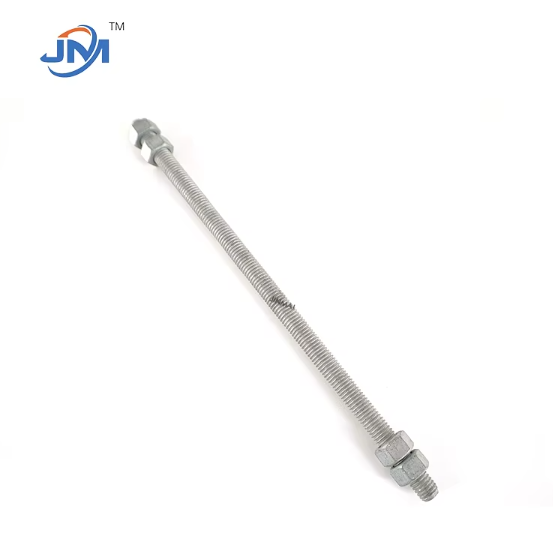
A stud bolt is a fastener with threads on both ends and a threadless rod in the middle. It is widely used in equipment connection scenarios that require high-precision alignment or frequent disassembly, such as power equipment flanges, pipeline valves, heavy machinery, etc. Its design feature is that it can achieve double-sided fixing without additional nuts, and has strong installation flexibility.
Hex Bolt
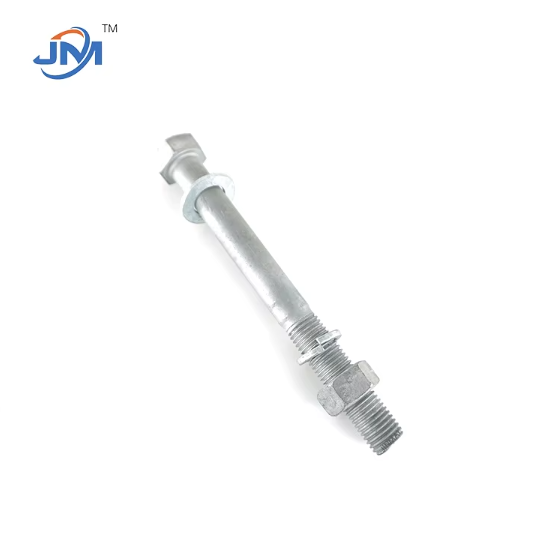
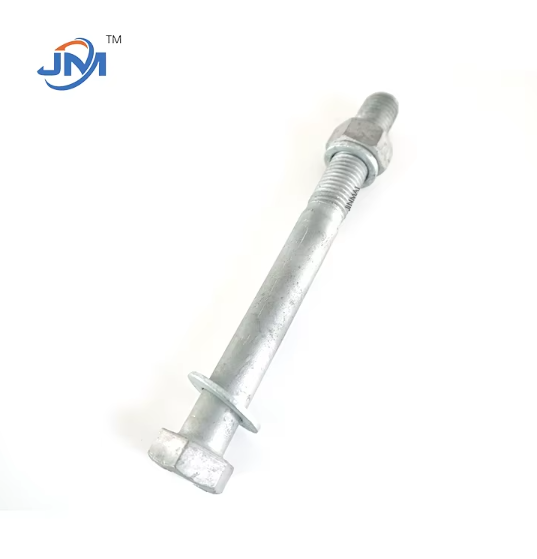
Hex bolts are standard fasteners with a hexagonal head design. They are used with nuts or pre-threaded holes. With their high torque carrying capacity, they have become a common choice in the industrial field. Their hexagonal head design allows for quick installation using a wrench or socket tool. They are suitable for critical connection points such as transformers, generators, and steel structures.
1. High-strength material
Made of high-quality carbon steel, alloy steel or stainless steel, the tensile strength reaches 8.8 to 12.9, meeting the needs of high strength and fatigue resistance.
2. Excellent anti-corrosion performance
The surface is treated with galvanizing, Dacromet or hot-dip galvanizing, and has passed the salt spray test for more than 500 hours, adapting to harsh environments such as humidity, high temperature, and chemical corrosion.
3. Precision thread process
The thread accuracy meets the ISO 898/ISO 965 international standards, with a tolerance grade of 6g/6H, ensuring perfect matching with the nut and base hole.
4. Diverse specifications to choose from
The diameter covers M6 to M100, and the length ranges from 30mm to 500mm. It supports non-standard customization and adapts to the needs of different industries around the world.
5. Reliable connection performance
Through the preload test, the risk of loosening caused by vibration is reduced to ensure the long-term stable operation of the equipment.
1. Raw material screening
Select high-quality steel and use spectral analysis to ensure that the composition meets ASTM or DIN standards.
2. Cold heading
Use a multi-station cold heading machine to form the bolt head and rod body to improve material utilization and structural density.
3. Thread processing
Use the thread rolling process to form high-precision threads with a surface finish of less than Ra3.2μm, reducing installation friction loss.
4. Heat treatment and strengthening
Tempering treatment (quenching + tempering) optimizes the grain structure, and the hardness uniformity reaches HRC 22-34, taking into account both strength and toughness.
5. Surface treatment and testing
Precise control of coating thickness (such as galvanizing 8-12μm), combined with 100% full inspection size, magnetic particle inspection and torque testing to ensure zero-defect delivery.
Materials: Carbon steel (Grade 4.8-12.9), stainless steel (A2/A4), alloy steel (ASTM A193 B7/B8)
Diameter range: M6 to M100 (supports British UN/UNC/UNF threads)
Length range: 30mm to 500mm (extended specifications can be customized)
Strength grade: 4.8, 8.8, 10.9, 12.9 (in accordance with ISO 898-1 standard)
Surface treatment: galvanized (in accordance with ASTM F1941), Dacromet (in accordance with DIN 50939), hot-dip galvanized (in accordance with ASTM A153)
Applicable standards: ISO 4014/4017, ASME B18.2.1, DIN 931/933
Conclusion:
As a leading fastener manufacturer in China, Handan Jinmai Fastener Manufacturing Co., Ltd. has been deeply involved in the fields of power, petrochemical, and machinery manufacturing for more than 20 years. With advanced automated production lines and strict quality management systems, it provides high-precision, long-life Stud Bolt and Hex Bolt solutions to global customers. Our products are ISO 9001, CE, and RoHS certified, support customized services and fast delivery, and help your project move forward efficiently.
We have recommended some of our Related products to you. I hope you will be interested.